Hampstead Architecture and Planning

London

Architects in Sidcup

Sidcup’s research point returned Bexley, while Bromley also appeared in the 1,400-metre authority list. Eight conservation areas were found nearby: Christ Church, Halfway Street, Longlands Road, Old Forge Way, The Green, The Hollies, Willersley Avenue and Braundton Avenue, and Chislehurst. This combination makes both authority and designation verification necessary. It does not show that a Sidcup property lies in any named area. The address pin should decide which council material and contextual evidence belongs in the project brief.

Last updated

Practice leadership

Eyal Moran, Director and Lead Architect, is an ARB-registered architect, leading design judgement, planning strategy and technical coordination across client projects.

Verify on the Architects Register

Planning at a glance

Sidcup

Planning at a glance in Sidcup
Local planning authorityConfirm for the exact property address; the neighbourhood research point is not an address result
Likely approval routeConfirm from the exact address, property type, ownership, designation and proposed work before drawings begin
Statutory determination time8 weeks for most householder applications (13 weeks for major applications)
Typical drawing package£395–£4,950 inc. VAT, fixed fee. Find my package →

Sidcup project advice should be written only after the map identifies the responsible authority and applicable designation. A site connected to The Green, Halfway Street or Willersley Avenue and Braundton Avenue may call for its own visual explanation, while one outside the returned boundaries should not be described as conserved. Drawings should show the proposal’s actual extent, dimensions and visible materials. Bexley is the evidence-led starting route, but planning history and the specific works still need checking before anyone states that permission is unnecessary or predicts a decision.

For Sidcup technical design, use survey evidence to establish the building and boundary conditions; the research record supports no assumptions about property type. Coordinate structure, moisture, energy, drainage and fire matters around the chosen work. If a Bexley map check connects the address to Christ Church, Longlands Road or another returned designation, conspicuous external details may need earlier testing. The nearby Bromley result also means consultant briefs should carry the complete address and confirmed authority, reducing the risk that policy or building-control enquiries are directed incorrectly.

Local analysis

What matters in Sidcup

Sidcup planning-authority boundary evidence

Sidcup sits close enough to an administrative edge for both Bexley and Bromley to appear in the evidence, although the checked coordinate returned Bexley. Do not choose between them from the place name. An exact address overlay should identify the decision-maker and be filed before policies, validation material or fees are discussed.
Sidcup exact-address authority check

The non-responsible radius authority remains context unless a separate project effect gives it relevance. A Bexley property result supports a Bexley route; a Bromley result requires the brief, policy references and correspondence to follow Bromley instead.

Sidcup nearby conservation evidence

Eight returned polygons give Sidcup a mixed but manageable screening set. Chislehurst belongs to the Bromley part of the evidence, while Christ Church, Halfway Street, Longlands Road, Old Forge Way, The Green, The Hollies and Willersley Avenue and Braundton Avenue are Bexley records.

Sidcup designation decision

Borough ownership still does not establish which boundary, if any, reaches the property; map plausible areas against the address, distinguish coverage from setting and distance, and consult only the appraisal connected to a verified relationship. The list supplies no property-specific heritage or construction facts.

Local evidence

What the local evidence tells us about Sidcup

Sidcup survey evidence

For Sidcup, the authority result should change the title information, not the measured geometry. The site plan, comparable existing and proposed plans, affected elevations and necessary sections all come from the property and design.

Sidcup drawing coordination

Conservation content is conditional: if The Green, Chislehurst or another returned boundary is mapped to the site or a credible setting, add the view and note that demonstrate it; otherwise leave those names off. This keeps the drawing set usable whether Bexley or Bromley is confirmed and avoids presenting a radius hit as designation of the address.

Useful local facts

What Sidcup homeowners should know

Preparing a Sidcup first review

A Sidcup homeowner should provide the full address, a location plan, photographs of each affected elevation and a clear account of the proposed work. Ask for a written confirmation of the responsible authority before relying on policy or fee information, because Bexley and Bromley both appeared in the research context.

Sidcup homeowner evidence checklist

The architect should also record which, if any, of the eight nearby conservation-area boundaries reaches the site. This gives the Sidcup brief a traceable basis and keeps proximity evidence separate from facts established for the property.

Local process

How we would sequence a project in Sidcup

A Sidcup project should move through an authority gate before a design gate. First confirm Bexley rather than Bromley for the address; next filter the eight conservation results and review planning history. The concept can then respond to the evidence actually connected to the site.

Sidcup technical delivery sequence

Planning and technical packages should develop from that same decision, with any designation-sensitive materials resolved before contractor pricing. Recording why Chislehurst or another radius result is not relevant is as useful as confirming one, because it keeps later advice anchored to the verified scope.

Decision checklist

What to check before starting in Sidcup

Sidcup decision gate

A Sidcup option can move forward only after the Bexley-or-Bromley question has an address-level answer. Alongside it, record the outcome of the eight conservation checks, relevant planning history and the proposed changes visible outside the property. The next action for an unresolved point should be proportionate to the design decision it might affect.

Sidcup evidence checkpoint

Once the client chooses an option, describe the submission route as the confirmed-authority route, not automatically Bexley. Retain why the other authority and any nearby polygons were excluded. That correction keeps point evidence from becoming a property fact.

Thinking about a project in Sidcup?

Send the address and a short description. We will confirm the likely approval route and the drawings your project needs.

Local planning

Planning & conservation context

The Sidcup evidence carries several locally named conservation records alongside Chislehurst, which belongs in the radius context but should not be assumed relevant to every site. Bexley is the returned authority for the point; Bromley proximity is a boundary alert rather than an alternative council choice without an address check. A defensible source schedule should preserve each official title, map the property and distinguish coverage, possible setting relationship and simple proximity. That hierarchy prevents the research list from becoming an unsupported statement about the property’s status.

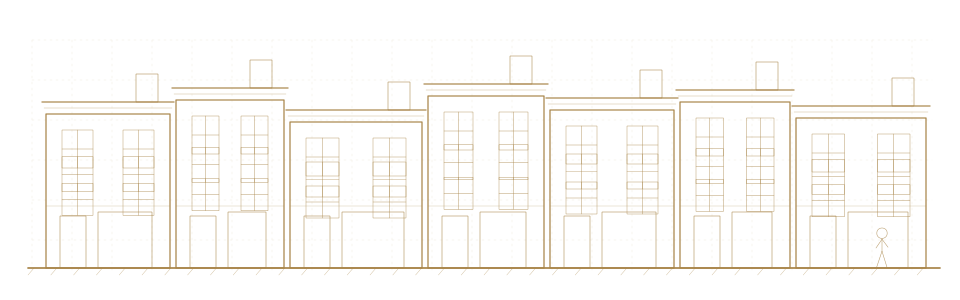
Illustrative study — street elevation

Services

Architectural services in Sidcup

Explore all architectural services

For services without a dedicated Sidcup page, use the London-wide overview to understand the scope, deliverables and next steps.

Architecture in Sidcup: FAQs

Why must a Sidcup address be checked between councils?

Bexley was returned at the research point, but Bromley was also found within 1,400 metres. The exact property location should confirm the responsible authority before policy research, pre-application advice or a formal submission begins. The Sidcup project can then approach Bexley or Bromley on evidence, not on postcode familiarity.

Are all eight Sidcup conservation results constraints?

No. They are records found within the radius, not designations assigned to the property. Map each plausible boundary and identify only those covering or materially related to the site; document the others as nearby exclusions. This gives the homeowner a short applicable list rather than a blanket Sidcup conservation label.

What should Sidcup planning drawings make clear?

They should identify the site, existing and proposed work, dimensions and externally visible materials. Where a returned designation is verified, explain the response to its specific context. Where none applies, address the confirmed authority’s requirements without unsupported heritage wording. Later consultants can work from the confirmed Sidcup context without carrying excluded radius names into their specifications.

Discuss an architecture project in Sidcup

Send the Sidcup address, photographs and intended work. We will identify the authority, designation and building questions to resolve before a full design or technical package is commissioned.

Call 020 8054 8756Send Details